
One Day at a Time
Why a pen and paper will be your best wellness investment
Jodie Innes
2/24/20266 min read
When discussing wellness and goals our brains begin to think of this as a task that must be completed times again. It can be difficult for individuals to view the idea of improving their wellness habits in a positive way without it feeling like a detrimental task. If we start from the beginning, it is important for individuals to prioritise what is important for them and be conscious of habits that may negatively impact their wellness. The National Library of Medicine (2017) suggests that positive wellness patterns are implemented by having a healthy variety of foods, constant sleep cycles, exercise and work-life balance, however, as a society we are aware of the changes we need to make were just not sure how to implement them. The discussion of wellness can often be daunting for some as money and income are often a factor. The goal intended to achieve in this article is to help individuals who are on a budget or trying to improve their own well-being by breaking down the basics and avoiding money traps.
Longevity and wellness
‘One day at a time’ is a phrased use unanimously throughout society and a phrase that I recommend one to live by when beginning their wellness journey – do not fault yourself for knowing you need a break. The whole point of starting a journey is that it is exactly that – a journey that it is unique to you. You know yourself better than anyone, your limits, your weaknesses but also your strengths. It is about starting and taking it one day at a time. Glevum fitness’ articles deep dives the reasons why people lose faith in themselves when going to the gym. They explain that people feel as if they fail because they haven’t reached their goals quick enough (2025). Instead of looking at it through a negative light, I suggest that you be proud of what you’ve done so far. According to West London Physiotherapy that 60% of people will be more likely to fail their yearly goals because it’s too big and suggests that making smaller more achievable goals, either alongside this or instead is much more motivating and achievable (2018). However, it is still important to note that you can take breaks; you can rest but make sure that you know that one day you are going to want to start again.
Mental and physical well being
The truth about your wellbeing is that it’s all connected, evidently, you’re killing two birds with one stone. Our biggest enemy is ourselves and we need to find ways to diversify these healthy mantras in ways that work for us. For example, say you have been putting off that gym session, instead maybe walk to work. If you have been binge eating pizza, drink water to wash it down. Find the balance in everything and little by little these tasks
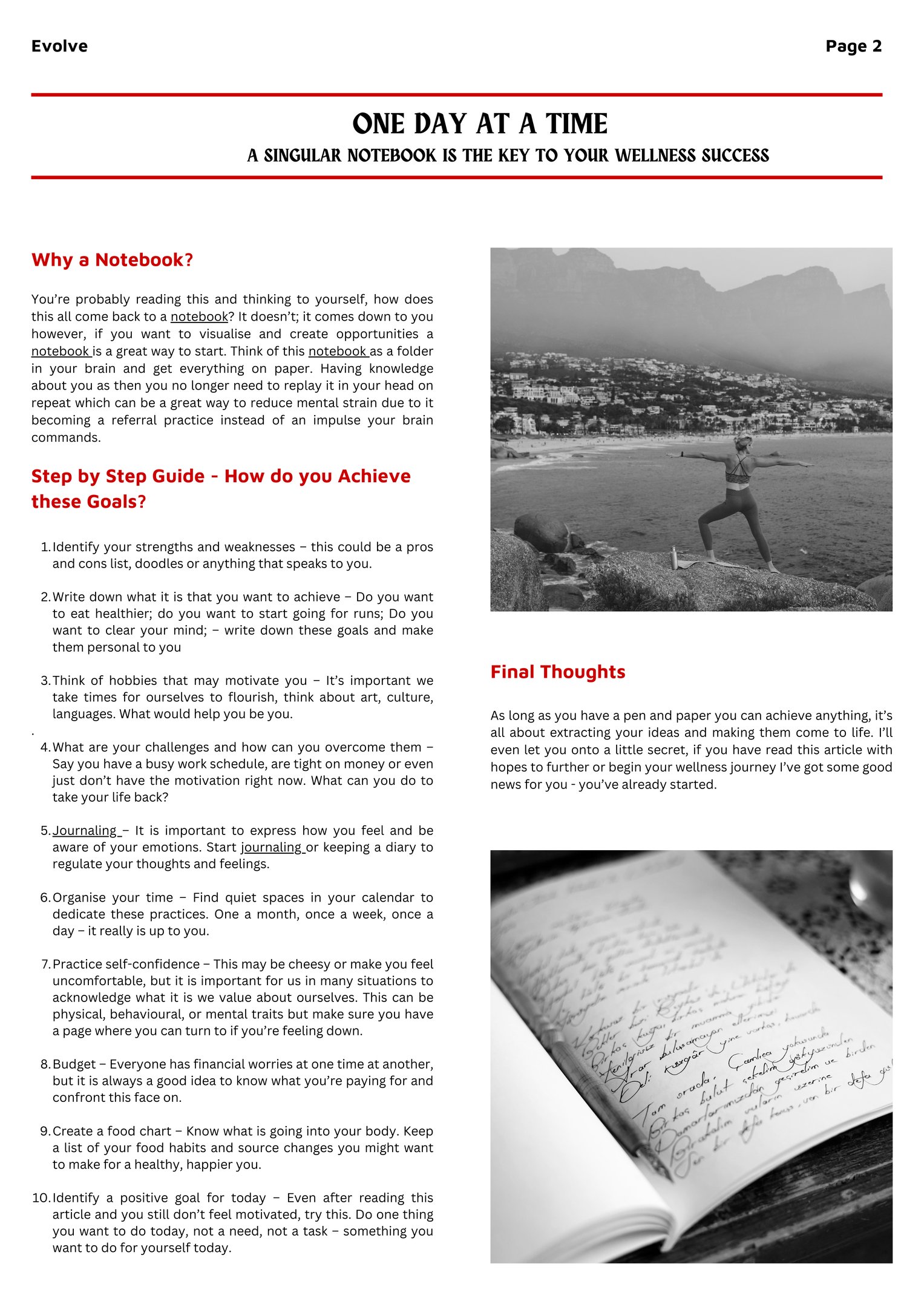
won’t feel as challenging - they will feel like second nature. An article that has always intrigued me is “If This Is Supposed to Be Easy, Why Is It So Hard?” (CHAAD, 2026) which states that those who have been diagnosed with ADHD have found the impact between identifying the idea of a command versus a want. The article details that those with ADHD find tasks motivated by interest and dopamine much more fulfilling and easier to complete as opposed to tasks that feel boring and mundane. I believe if we apply the same principle to wellness that we are more likely to succeed for example, if we tell our body that we must do something it can feel like an overbearing challenge rather than an opportunity that we are lucky to participate in. Although this may not apply to everyone and some may be motivated by a challenge; I believe you’ve still had to overcome a lack of motivation or had to fight with for your body to comply with your brain in which way these mantras still apply. It’s about reframing your needs into your wants. A further example regarding wellness would be ‘I need eat healthier’ instead frame it as ‘I like cucumber, maybe I should add this as a side to my meal’ or ‘I need to go for a walk today’ rather ‘maybe ill check up on my friends and see if they want to go for a walk at the beach as it is a lovely sunny day.’ It’s the same thing you’re just framing it in a way that makes your brain happier.
Why a notebook
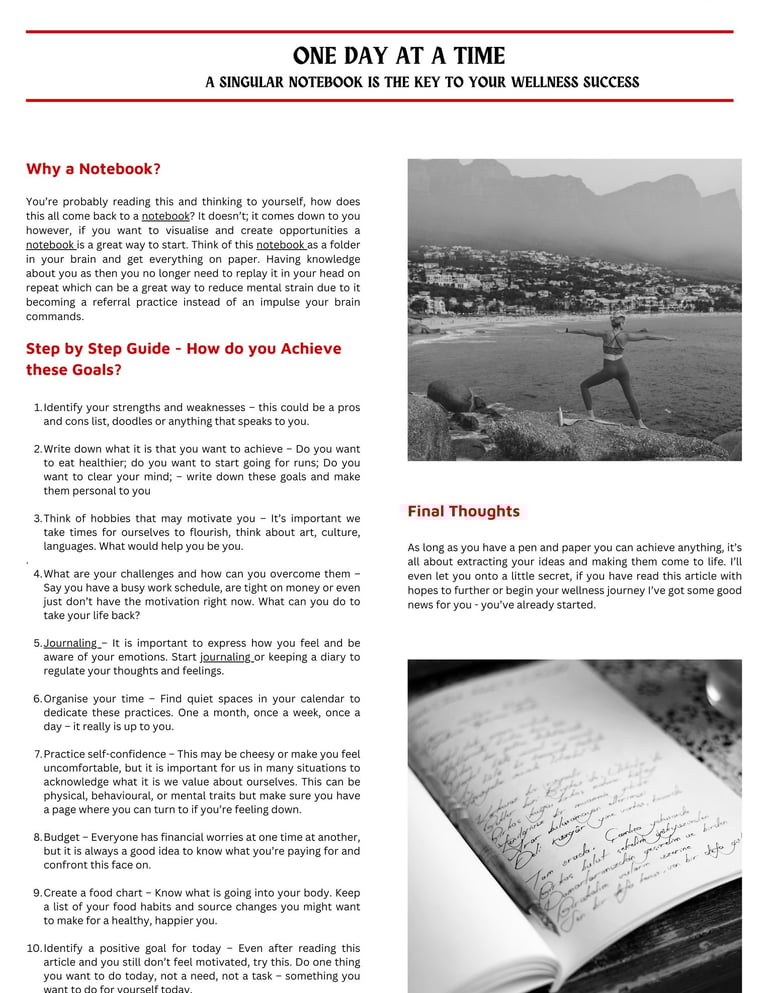
You’re probably reading this and thinking to yourself, how does this all come back to a notebook? It doesn’t; it comes down to you however, if you want to visualise and create opportunities a notebook is a great way to start. Think of this notebook as a folder in your brain and get everything on paper. Having knowledge about you as then you no longer to replay it in your head on repeat which can be a great way to reduce mental strain due to it becoming a referral practice instead of an impulse your brain commands.
Step by step ideas on how to accomplish your wellbeing goals.
1. Identify your strengths and weaknesses – this could be a pros and cons list, doodles or anything that speaks to you.
2. Write down what it is that you want to achieve – Do you want to eat healthier; do you want to start going for runs; Do you want to clear your mind; – write down these goals and make them personal to you.
3. Think of hobbies that may motivate you – It is important we take times for ourselves to flourish, think about art, culture, languages. What would help you be you.
4. What are your challenges and how can you overcome them – Say you have a busy work schedule, are tight on money or even just don’t have the motivation right now. What can you do to take your life back?
5. Journaling – It is important to express how you feel and be aware of your emotions. Maybe start journaling or keeping a diary to regulate your thoughts and feelings.
6. Organise your time – Find quiet spaces in your calendar to dedicate these practices. One a month, once a week, once a day – it really is up to you.
7. Practice self-confidence – This may be cheesy or make you feel uncomfortable, but it is important for us in many situations to acknowledge what it is we value about ourselves. This can be physical, behavioural, or mental traits but make sure you have a page where you can turn to if you’re feeling down.
8. Budget – Everyone has financial worries at one time at another, but it is always a good idea to know what you’re paying for and confront this face on.
9. Create a food chart – Know what is going into your body. Keep a list of your food habits and source changes you might want to make for a healthy, happier you.
10. Identify a positive goal for today – Even after reading this article and you still don’t feel motivated, try this. Do one thing you want to do today, not a need, not a task – something you want to do for yourself today.
As long as you have a pen and paper you can achieve anything, it is all about extracting your ideas and making them come to life. I’ll even let you onto a little secret, if you have read this article with hopes to further or begin your wellness journey, I’ve got some good news for you - you’ve already started.
References
CHADD (2026) “If This Is Supposed to Be Easy, Why Is It So Hard?” Available at: https://chadd.org/attention article/if-this-is-supposed-to-be-easy-why-is-it-so-hard/ (Accessed 24/02/26)
Crisp, D. (2025) Why Most People Quit on Their Fitness Goals (And How To Make Sure You’re Not One of Them). Available at: https://glevumfitness.com/fitness/why-most-people-quit-on-their-fitness-goals-and-how to-make-sure-youre-not-one-of-them/ (Accessed 24/02/26)
Li, J. (2018) Children’s Reward and Punishment Sensitivity Moderates the Association of Negative and Positive Parenting Behaviours in Child ADHD Symptoms. Available at:
https://pubmed.ncbi.nlm.nih.gov/29556859/ (Accessed 24/02/26)
National Library of Medicine (2017) Positive Affective Processes Underlie Positive Health Behaviour Change. Available at: https://pmc.ncbi.nlm.nih.gov/articles/PMC5682236/ (Accessed 24/02/26)
West London Physiotherapy (2018) Why Do Some People Achieve Their Fitness Goals While Others Fail? Available at: https://www.westlondonphysio.co.uk/news-articles/why-do-some-people-achieve-their-fitness goals-while-others-fail/ (Accessed 24/02/26)